The single most important rule of group monetization: the community must always feel like it benefits more from your group than you do. The moment members feel like they're being sold to more than they're being served, they stop engaging. Low engagement kills reach. Low reach kills monetization. The sequence is always community first, revenue second, not the other way around.
Most guidance on monetizing Facebook groups starts with the revenue strategy and ignores the community dynamics that determine whether that strategy will actually work. This guide starts where it should: with honest criteria for when a group is ready to monetize, and what happens to communities that try before they're ready.
Is Your Group Ready to Monetize?
Group size is the wrong metric. A group of 500 genuinely engaged members who trust you is worth more than 20,000 passive members who joined once and never came back. Before testing any monetization method, check these engagement signals:
| Signal | Ready to Monetize | Not Ready Yet |
|---|---|---|
| Post engagement rate | 5%+ of members react or comment on posts | Under 1%: posts get ignored |
| Member-initiated posts | Members post questions and discussions without prompting | Only the admin posts; members are passive |
| Trust in the admin | Members follow your recommendations and tag you for opinions | Members don't know who runs the group |
| Time in group | 6+ months of consistent value delivery before first offer | Trying to monetize a new or new-to-you group |
| Warm lead signals | Members already ask about your services/products in comments | No one has ever asked what you do |
If you're not meeting these signals, the monetization work is still build community, not start selling. Adding revenue methods to a low-trust group doesn't accelerate the relationship, it damages it.
The fastest way to kill a Facebook group community: increase promotional content suddenly after a long period of pure value. Members who joined for the community feel betrayed when the tone shifts. If you plan to monetize, introduce promotional content gradually from the beginning at a low ratio (10% max), so it's always part of the group culture rather than a sudden change.

Method 1: Digital Products Launched to a Warm Audience
Your group is the best launch audience a digital product can have. These are people who already trust you, already know your content style, and have self-selected into a community around your topic. A product launch to your group converts at dramatically higher rates than cold email lists or paid ads.
What works well as a group-native digital product launch:
- Ask first: Before creating the product, post a question in the group asking what they most want help with. "If I made a guide on [topic], what would be most useful to include?" This seeds the idea, makes members feel involved in the creation, and tells you what will actually sell.
- Beta pricing for members: Offer early access at a discounted rate to group members before the general public. Frame it as a thank-you for being in the community. Members feel valued; you get early revenue and real feedback.
- Post the results, not just the offer: Rather than announcing "My course is now available," share a result: "Three beta students have already [specific outcome] in their first week. If you want to join the next cohort..." Results sell; announcements don't.
Products that convert well from Facebook group launches: online courses, templates and toolkits, ebooks and guides, workshops, and group coaching programs.
Method 2: Paid Subgroups and Tiered Access
Facebook's native paid groups feature allows you to charge monthly for access to a group. The most effective structure is a free main group (for community and marketing) paired with a paid inner circle group (for premium content, direct access to you, or exclusive resources).
What justifies paid access:
- Direct Q&A access to you as the admin or expert
- Exclusive content not available in the free group (advanced training, templates, weekly hot seats)
- Peer quality filtering (paid groups have more committed members, which creates better peer interactions)
- Early access to your products and services
Pricing reality: Facebook group subscriptions typically work best at $9-49/month for broad communities and $49-197/month for expert-led groups with genuine direct access. Higher price points require a clear, specific value proposition that free members can see is delivered consistently.
Rather than trying to convert all free members to paid, focus on the 5-10% who are most engaged. These are the members who comment on every post, DM you questions, and reference your content in their own posts. These are natural buyers for a paid tier. An explicit offer to your "top contributors" often converts better than a broadcast offer to the whole group.
Method 3: Affiliate Partnerships
Recommending products or services you genuinely use and believe in, with an affiliate commission, is one of the cleanest monetization methods for communities because it aligns with the value-first culture groups depend on.
For a full guide to doing this right (including FTC disclosure requirements and which niches work best), see Facebook group marketing for affiliate marketers. The rules that keep affiliate marketing community-positive:
- Only recommend what you use. If members later discover you were promoting something you don't actually stand behind, the trust damage is permanent and irreversible.
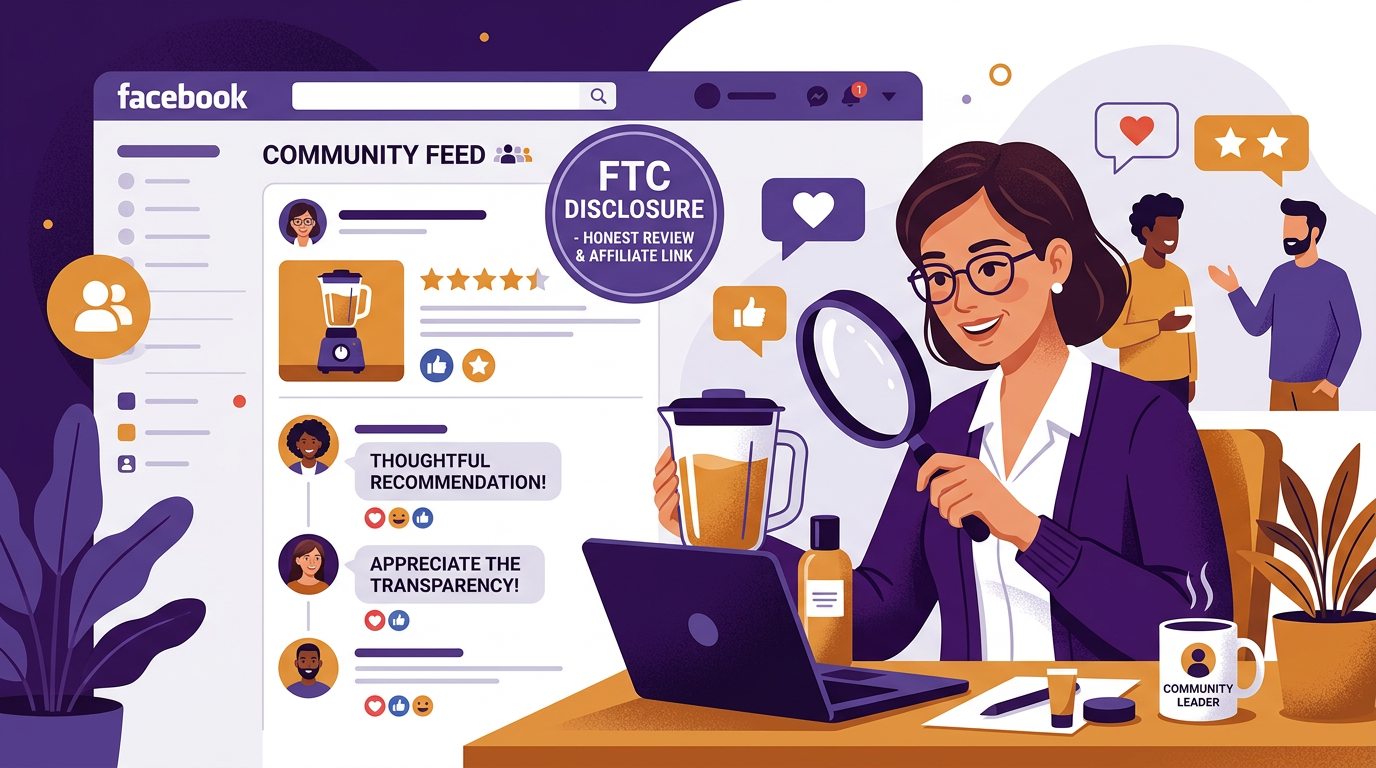
- Disclose clearly. "This is an affiliate link, I earn a commission if you buy, and here's why I recommend it regardless" is the correct format. FTC guidelines require disclosure. More practically, members appreciate the honesty.
- Recommendation rate limit: If more than one in ten posts mentions an affiliate product, you're over the threshold. Keep the ratio low.
- Context over broadcast: The best affiliate conversions happen when you recommend something in response to a member's specific question, not in a standalone promotional post. "You asked about [problem], I've been using [product] for this and it's been genuinely good, here's my link if you want to check it out."
Method 4: Brand Sponsorships and Partnerships
Once a group reaches 5,000+ engaged members in a specific niche, brands in adjacent categories may approach you for sponsored posts or partnerships. You can also proactively pitch brands whose products your audience would genuinely benefit from.
What makes a sponsorship community-positive rather than community-damaging:
- The brand's product is genuinely relevant to your members' interests and needs
- You've personally tested and can speak authentically about the product
- Sponsored posts are clearly disclosed as such
- The ratio stays at one sponsored post per 10-15 organic posts
- You maintain editorial control (you write the post in your voice, not the brand's language)
What destroys community trust in sponsorships: sponsoring products you haven't used, multiple sponsor posts in a short period, posts written in obvious brand-speak, or categories that feel misaligned with the group's purpose.
Method 5: Service Upsells and Lead Generation
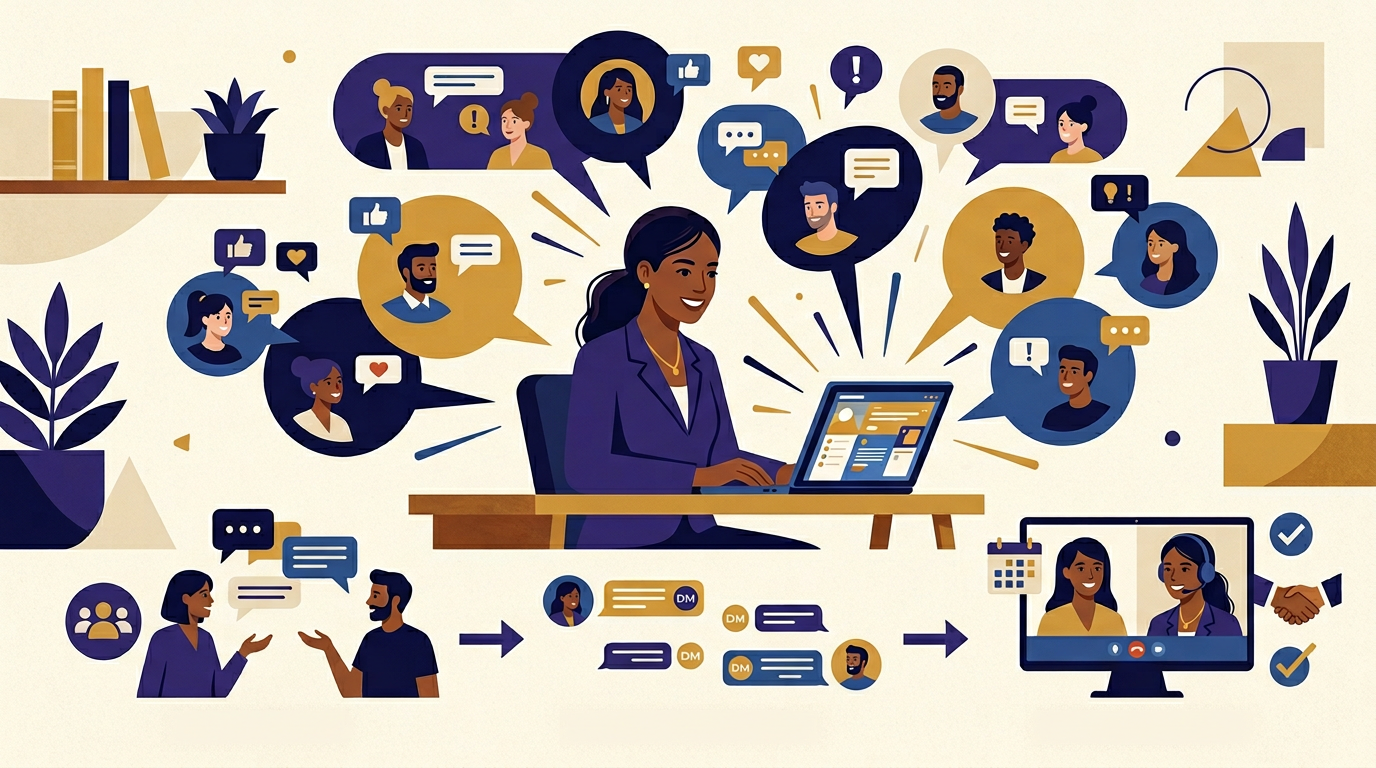
For coaches, consultants, agencies, and service businesses, the group itself is a lead generation engine. Monetization happens not inside the group but through the discovery calls and client engagements that the group generates.
This is the most sustainable long-term monetization model because the community never feels sold to directly. They just see expertise, build trust, and self-select into inquiring about your services.
The key mechanics:
- Consistent value-first posting (as covered in the coaching group marketing guide)
- Occasional soft mentions of your work: "In my consulting work I see this pattern constantly..." tells members you do paid work without pitching it
- A clear path for interested members: your profile bio, a pinned post, or a periodic announcement of availability ("Taking two new clients in April, message me if you want details")
What Never to Monetize
Some things will generate short-term revenue and permanently damage your community. Avoid:
- Selling member data: Never share, sell, or allow access to your member list or email information collected through group membership. This is both legally problematic and a catastrophic trust violation if discovered.
- Letting sponsors control content: If a brand relationship starts dictating what you can and can't post, the community relationship suffers. No sponsorship is worth compromising editorial independence.
- Pay-to-post schemes: Charging other businesses to post promotional content in your group. Members joined for community, not a directory of ads.
- Urgent/artificial scarcity: "This offer expires in 24 hours" applied to a group audience that's been building trust for months reads as manipulative. Your community deserves a more respectful approach than pressure tactics.
Group admins who are also managing revenue streams often find their posting consistency drops precisely when it should be highest. If you want the group to keep producing revenue, it needs to stay active. PilotPoster's Auto AI feature can keep your group fed with fresh, relevant content automatically, so the community stays healthy even during launch periods or busy client work weeks.
- Monetize engagement, not size. A group of 500 engaged, trusting members is monetizable. A group of 20,000 passive members is not.
- Introduce promotional content gradually from the start (10% ratio). A sudden shift from pure value to selling is the fastest way to kill community trust.
- The 5 methods that work: digital product launches, paid subgroups, affiliate partnerships, brand sponsorships, and service lead generation
- For digital product launches: ask members what they want first, offer beta pricing, and post results rather than announcements
- Affiliate marketing works when you only recommend what you use, disclose clearly, and recommend in context rather than as standalone promo posts
- Never sell member data, let sponsors control content, or use pressure tactics on a trust-based audience
- Group admins who let posting consistency drop during monetization phases undermine the very engagement that makes the group valuable