The most effective Facebook group strategy for network marketers is attraction marketing: posting content that makes people curious enough to reach out to you, rather than pitching your product or opportunity directly. This means leading with lifestyle, results, and education, and letting your profile do the selling when people check you out. Start in 20-30 relevant groups, build credibility, then scale to 100+ groups with automation once you know what works.
Network marketers have a reputation problem on Facebook. Not because network marketing itself is illegitimate, but because too many people in the space treat Facebook groups like a free advertising board, flooding them with identical pitches that nobody asked to see.
The irony is that Facebook groups are genuinely one of the best channels for network marketing, when used correctly. The people in wellness groups, work-from-home groups, and personal development groups are often exactly the audience you want: already interested in health, already looking for income opportunities, already open to change. The question is how you show up for them.
This guide is about the version of group marketing that builds a real pipeline, not the version that gets you banned in a week.
Why the Standard Approach Fails

The standard approach looks like this: join every group you can find, post the same pitch about your product or income opportunity, repeat daily. It fails for three reasons.
Admins recognize it immediately. Every group admin has seen this pattern hundreds of times. The post gets deleted within minutes, sometimes before anyone sees it.
Facebook detects duplicate content. Posting identical text across dozens of groups signals automation, and Facebook limits the distribution of posts it identifies as spam. Even if the post stays up, fewer people see it.
Cold audiences don't respond to cold pitches. Group members don't know you. They have no reason to trust your claims about your product or opportunity. A pitch from a stranger gets ignored or reported at the same rate it would from a door-to-door salesperson: very high.
The alternative isn't softer pitching. It's a completely different approach.
Attraction Marketing in Facebook Groups
Attraction marketing is the practice of creating content that makes people come to you, rather than chasing them. In the context of Facebook groups, it means:
- Posting content that demonstrates your results or lifestyle
- Sharing education or value that helps people with problems your product solves
- Being visibly active and helpful so members associate your name with credibility
- Letting your Facebook profile tell the product and opportunity story when curious people look you up
The key shift is this: your posts don't sell. Your profile does. Group content generates curiosity. Your profile converts it.
Before posting in a single group, make sure your Facebook profile is set up to convert visitors. Your cover photo should communicate your lifestyle or product benefit. Your bio should hint at what you do and how to connect. Your recent posts should show a mix of personal content and product/opportunity content. If someone visits your profile after seeing your group post and finds nothing interesting, the opportunity is lost.
Which Groups to Join
For network marketers, the best groups are ones where your target customer already hangs out, organized by the problem your product solves or the lifestyle it enables.
Warm Market Groups (Easier, Lower Volume)
Groups where your existing network might be:
- Local community groups in your area
- Alumni groups from your school, workplace, or organizations you're part of
- Hobby or interest groups you'd naturally join anyway
These groups are easier to build credibility in because you're posting alongside people who might already know you by name or face. Warm markets convert at higher rates because trust exists before you post.
Cold Market Groups (More Volume, Requires Patience)
Groups where your ideal prospect hangs out by interest:
| Product or Opportunity Type | Groups to Target |
|---|---|
| Health and wellness products | Weight loss support, intermittent fasting, clean eating, fitness over 40, mom fitness |
| Income opportunity / extra income | Work from home, side hustle ideas, stay at home moms, passive income, remote jobs |
| Skincare / beauty | Natural skincare, anti-aging tips, clean beauty, women's beauty tips |
| Financial wellness | Debt free journey, saving money tips, personal finance for beginners, budgeting |
| Essential oils / natural health | Natural living, holistic health, non-toxic home, wellness moms |
For how to find these groups efficiently, see the full guide on finding Facebook groups to join for marketing.
Post Types That Work for Network Marketers
Here are the five content types that build your profile views and warm audience without triggering admin bans.
1. The Lifestyle Post
Share something real from your life that demonstrates a benefit of what you do or sell, without naming the product directly. Let curiosity do the work.
Example for a wellness product:
Three months ago I was dragging myself out of bed every morning and hitting snooze twice. Now I'm up at 6am without an alarm and actually feel human by the time I sit down to work. The only thing that changed was my morning routine. If anyone's curious what I added, happy to share.
The product isn't named. The result is specific and relatable. Anyone who's experienced that same morning drag will feel seen, and the curiosity hook at the end captures the ones who want to know more.
2. The Educational Post
Share something useful related to the problem your product solves. This positions you as someone worth listening to, not just selling to.
Example for a health product line:
Something most people don't know about afternoon energy crashes: they're almost always a blood sugar issue, not a sleep issue. When you eat a high-carb lunch, your blood sugar spikes and then drops around 2-3pm. That's the crash. Adding protein and fat to lunch (even a small amount) buffers the spike and you feel much steadier. Works better than a second coffee, which just delays the crash. Has anyone noticed this pattern?
Useful, specific, not promotional. People who try this and it works now have positive associations with your expertise before you've ever mentioned your product.
3. The Testimonial or Result Post
Share a real result from yourself or, with permission, a customer or team member. Make it specific.
What not to write: "My products are amazing and I'm so grateful for this journey! DM me to find out more!"
What works better:
One of my customers reached out this week to say she's down 11 pounds in 6 weeks. She told me the biggest change wasn't the scale, it was that her knees don't hurt anymore when she goes up stairs. She's 52. That's the kind of thing that matters more to me than the product working exactly as advertised. Sharing because this doesn't get talked about enough in the wellness space.
4. The Curiosity Post
A short post that generates comments and DMs from people who want to know more. These work best when they describe a transformation or situation people recognize.
Example for an income opportunity:
Exactly one year ago I was working 50 hours a week at a job I liked well enough and wondering if this was just how life went. This month I made more working 25 hours than I did in that job. I'm not posting this to brag; I posted it wrong for the first year and almost quit three times. Happy to share what finally changed if anyone's in a similar place and wants to compare notes.
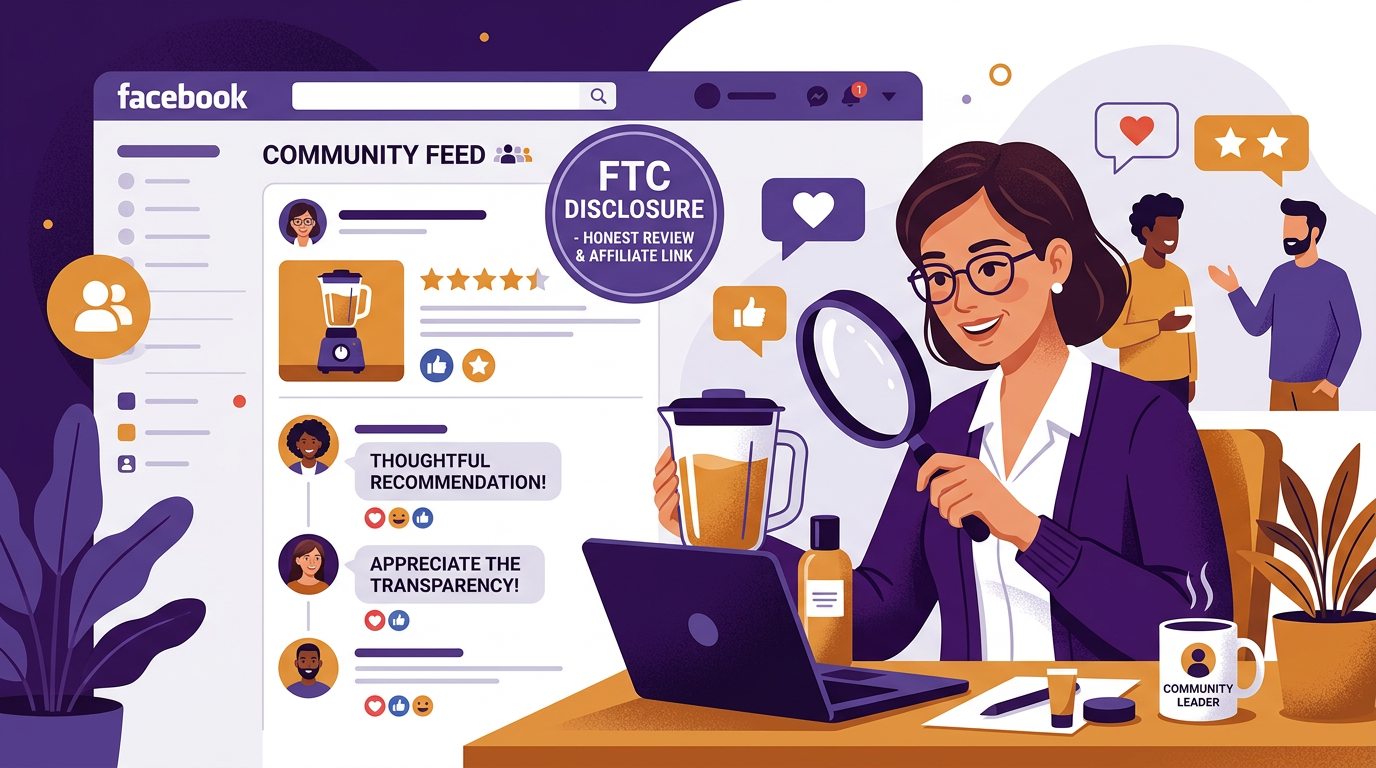
Exaggerated income claims ("Made $10,000 in my first month!") don't just risk FTC compliance issues; they don't work because most people don't believe them. Specific, realistic results that match what your average distributor experiences are far more persuasive to the people you actually want to attract.
5. The Helpful Answer
Scan your groups daily for questions you can genuinely answer well. Answer them fully and helpfully, with no promotion. Do this consistently, and members start to recognize your name as someone who knows their stuff.
When someone eventually asks what you do, or when you do post something promotional, that name recognition changes everything.
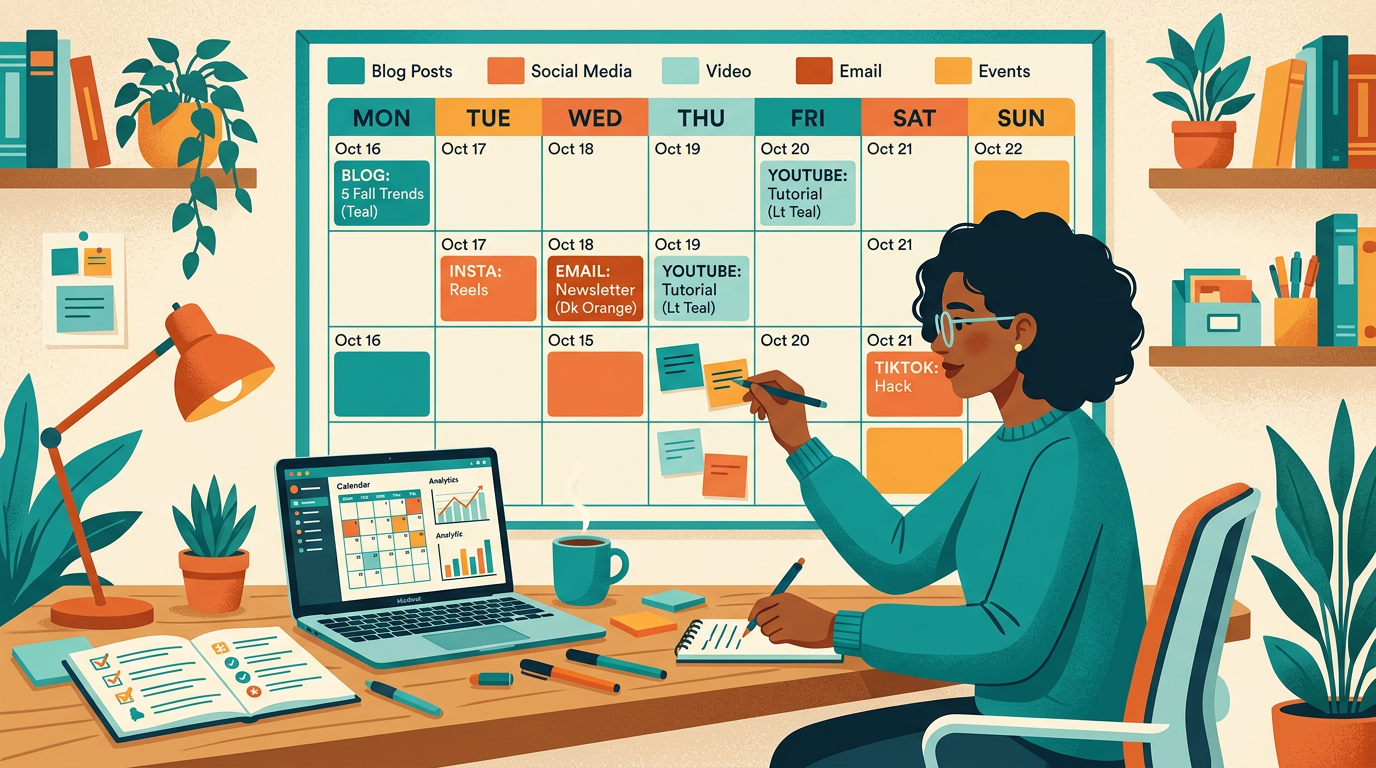
Daily and Weekly Posting Cadence
| Day | Content Type | Goal |
|---|---|---|
| Monday | Educational post | Establish expertise, generate saves and shares |
| Tuesday | Answer questions in groups | Build name recognition, create goodwill |
| Wednesday | Lifestyle or result post | Generate profile visits and curiosity |
| Thursday | Answer questions in groups | Stay visible without posting new content |
| Friday | Curiosity or discussion post | End-of-week engagement, comment volume |
| Weekend | Optional soft promo or personal post | Human touch, low-pressure visibility |
This is a cadence for one group or a small set of similar groups. If you're posting across 50-100 groups, you can repeat this content across those groups with variation, not word-for-word copies. Even small changes to phrasing (different opening sentence, different closing question) are enough to avoid duplicate detection.
Scaling From 10 Groups to 100+
The mechanics of posting to 10 groups manually are manageable. Twenty groups takes more time but is still doable. Fifty groups posted to individually is 3-4 hours per posting day. A hundred groups is not realistic by hand.
The network marketers who actually build large, consistent audiences in groups use automation to handle the posting mechanics while keeping their engagement personal.
PilotPoster works through a Chrome extension that posts from your real Facebook browser session. This is the only way to reach groups you've joined as a member (not just groups you admin), because Facebook's API doesn't support posting to joined groups. The extension posts to each group one at a time with configurable delays, the same way you would manually, and uses AI rewriting or Spintax to give each group a unique version of your post.
The result: you write the post once, PilotPoster handles the distribution across all your groups, and each group gets content that doesn't look templated.
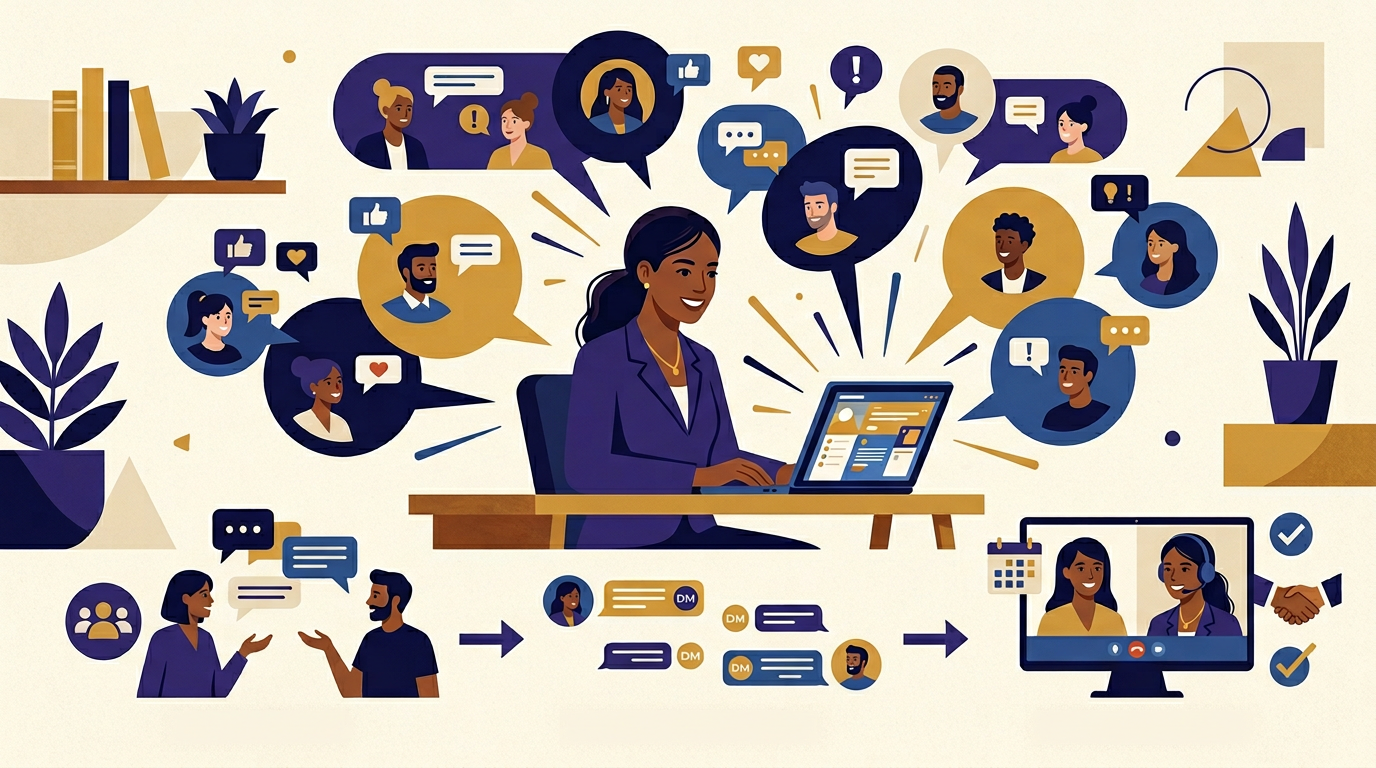
Automate the posting. Keep your comments and DMs personal. When someone comments on your group post or reaches out, that interaction should feel like a real conversation, because it is. The automation gets your content distributed. The relationship converts it into a customer or team member.
For more on the mechanics of multi-group posting and safe delays, see the full guide on posting to multiple Facebook groups at once.
- Attraction marketing works. Direct pitching to cold audiences in groups does not.
- Your profile converts the curiosity your posts create. Optimize it before posting anywhere.
- The five post types that work: lifestyle, educational, testimonial, curiosity, and helpful answers to member questions
- Specific, realistic results are more persuasive than vague or exaggerated claims
- A consistent posting cadence (educational Monday, result Wednesday, curiosity Friday) builds recognition over time
- Scaling beyond 30-50 groups requires automation for the posting side. Personal engagement on comments and DMs should stay manual.
- PilotPoster's Chrome extension is how you reach joined groups at scale: the Facebook API doesn't support joined group posting at all