
To increase Facebook engagement in 2026, focus on the surfaces and behaviors the algorithm rewards. Median Page engagement has fallen to roughly 0.15 percent, while Facebook Groups see meaningfully higher engagement because the algorithm prioritizes community interaction. The levers that move the needle are posting when your audience is online, asking questions instead of broadcasting, using the formats the algorithm favors, replying fast in the first hour, and posting consistently. Where you post matters as much as what you post.
Facebook engagement is not what it was five years ago. Organic Page reach has been squeezed for years, and the average brand post now reaches and engages a small fraction of followers. At the same time, the platform is actively pushing community content and short video, which means the opportunities have moved, not disappeared.
This guide starts with what the 2026 data actually shows, then covers the specific levers that increase engagement and how to apply them without guesswork.
What Good Facebook Engagement Looks Like in 2026 #
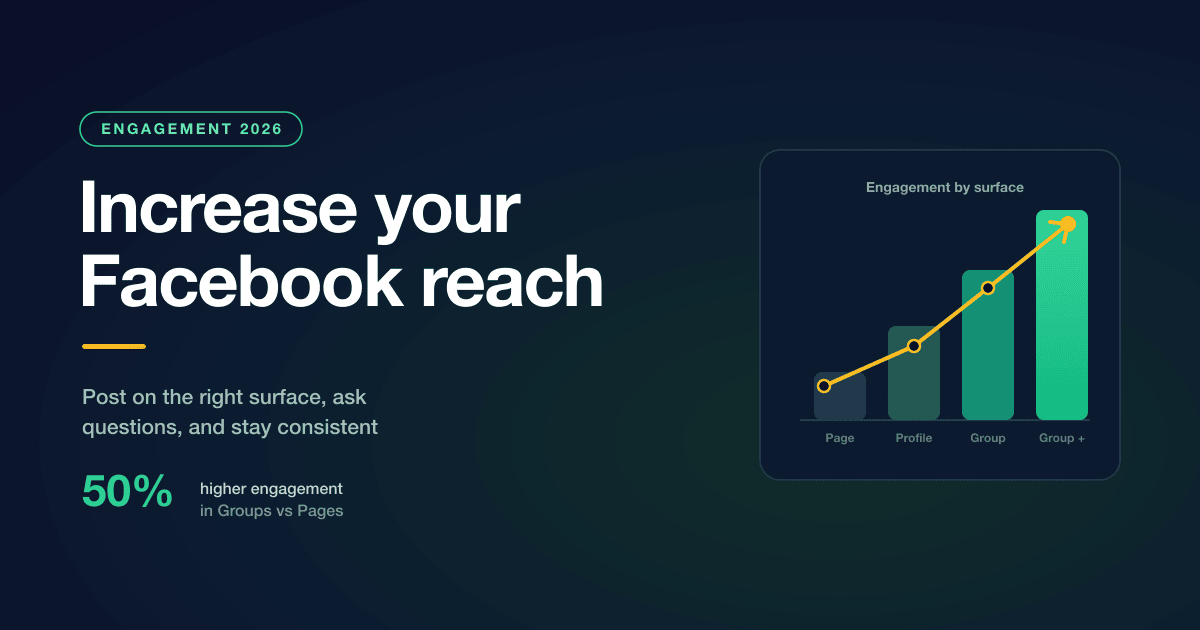
Start with a realistic benchmark. Across business Pages, median engagement now sits around 0.15 percent of followers per post, with photo posts performing best at roughly 0.20 percent. That means a Page with 10,000 followers might see 15 to 20 interactions on a typical post. If your numbers look like that, you are normal, not failing.
The reason is structural. Facebook throttled organic Page reach to push paid ads, and it rebuilt the feed around what it calls meaningful social interactions: content that sparks conversation between people, not passive brand broadcasts. Engagement rate is really a measure of how well your content triggers those interactions.
Two different numbers get confused constantly. Reach is how many people see your post; engagement rate is what share of them react, comment, or share. Low reach caps your engagement before content quality even matters, which is why the surface you post on is the first lever.
Where Facebook Engagement Actually Happens #
The single biggest factor in your engagement is not your caption. It is where you post. The same content performs completely differently across Pages, profiles, and Groups because Facebook distributes each one differently.
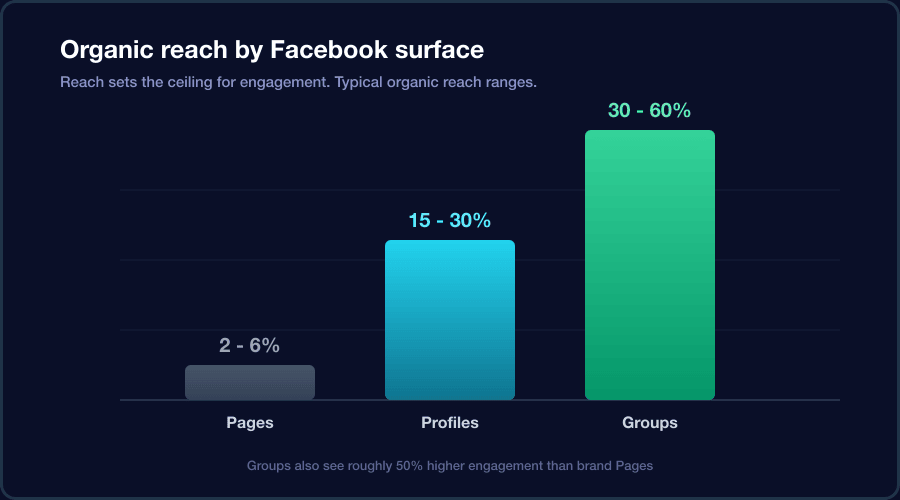
Organic reach, which sets the ceiling for engagement, varies dramatically by surface:
- Pages: roughly 2 to 6 percent organic reach. The algorithm shows Page posts to a small slice of followers.
- Personal profiles: roughly 15 to 30 percent. Profiles get far more organic distribution than Pages.
- Groups: roughly 30 to 60 percent, and Group content sees about 50 percent higher engagement than brand Pages, because members opted into the topic and the algorithm treats group activity as high-value interaction.
The takeaway is direct: if engagement is your goal, Groups and profiles are where the same effort produces more of it. We make the full case in why Facebook Groups matter more than ever and compare surfaces in Facebook Groups vs Pages for business.
The Levers That Actually Move Engagement #
Once you are posting on the right surface, these are the levers that reliably increase engagement, roughly in order of impact.
1. Post when your audience is online #
Timing sets how many people see a post while it is fresh, and early activity tells the algorithm whether to show it to more people. General 2026 data points to weekday mornings and midday, around 9 a.m. to 1 p.m., with Tuesday through Thursday strongest and weekends weakest. Use those as a start, then check your own audience data. For groups specifically, see the best time to post in Facebook groups.
2. Ask, do not broadcast #
The algorithm rewards comments more heavily than likes because comments signal conversation. Posts that end with a genuine question, ask for opinions, or invite people to share their own experience consistently out-engage announcements. "Which of these two would you pick, and why?" will beat "Check out our new product" every time.
3. Use the formats the algorithm is pushing #
Facebook is heavily promoting short video. Reels drive enormous volume and see meaningfully higher engagement than standard video. If video fits your content, it is currently the most favored format. When you do post video, add captions: most people watch with the sound off, so on-screen text keeps them engaged.
4. Reply fast, especially in the first hour #
The first 60 minutes after posting matter most. Replying quickly to early comments pulls those people back, extends the conversation, and signals to the algorithm that the post is generating interaction worth surfacing. A post you publish and abandon underperforms one you actively tend for the first hour.
5. Be consistent #
Sporadic posting kills engagement. When you disappear for a week, the algorithm deprioritizes you and your audience loses the habit of engaging. A steady cadence, even a modest one, keeps both the algorithm and your audience warm. Consistency is less glamorous than a viral post, but it is what compounds. Our guide to Facebook group post ideas gives you formats to keep that cadence varied.
Volume without quality trains your audience to scroll past you. A single post per day that genuinely asks something or teaches something outperforms a burst of promotional posts. Protect the quality bar, then hold the cadence.
How Consistency Scales Across Groups #
The two highest-leverage moves, posting on high-engagement surfaces and posting consistently, collide with a practical problem. Being genuinely present across many groups, every day, is a lot of manual work. Posting to ten groups by hand is an hour of copy and paste, and doing it every day is where most people quit.
This is the gap tooling fills. PilotPoster is a web app plus Chrome extension that posts to the groups you have joined through your own browser session, varies each post so it stays unique, and paces posting with randomized delays so it looks natural. It lets you hold a consistent presence across the high-engagement surfaces without the daily grind, so the levers above actually get applied instead of skipped on busy days.
Frequently Asked Questions #
What is a good Facebook engagement rate in 2026? #
For business Pages, median engagement is around 0.15 percent per post, with photos slightly higher near 0.20 percent. Anything meaningfully above that is strong for a Page. Groups typically see much higher engagement because members opted into the topic.
Why is my Facebook engagement so low? #
Usually because of low organic reach on Pages, inconsistent posting, or broadcasting instead of inviting conversation. Posting on higher-reach surfaces like Groups, asking questions, and replying quickly in the first hour are the fastest fixes.
Do Facebook Groups get more engagement than Pages? #
Yes. Group content sees roughly 50 percent higher engagement than brand Pages and far higher organic reach, because the algorithm treats group activity as meaningful interaction and members chose to join the topic.
What type of Facebook post gets the most engagement? #
Question and conversation posts earn the most comments, which the algorithm weights heavily. Among media, short video and photos outperform plain links. The best-performing posts combine a favored format with a genuine prompt to respond.
- Median Facebook Page engagement is around 0.15 percent, so low numbers are normal, not a personal failure.
- Where you post matters most: Groups reach 30 to 60 percent of members and out-engage Pages by about 50 percent.
- Reach is the ceiling for engagement, so choosing a high-reach surface comes before optimizing captions.
- Ask questions instead of broadcasting; comments are weighted more heavily than likes.
- Use the formats Facebook is pushing, especially short video with captions.
- Reply fast in the first hour to extend the conversation and signal value to the algorithm.
- Consistency compounds; tools that post across groups keep you present without the manual grind.


